Every year, thousands of students wonder:
“How did my teacher predict my grade so accurately?”
Or sometimes:
“Why was my predicted grade nothing like the final one?”
Let’s dive into how predicted grades work—and why they’re more science than guesswork.
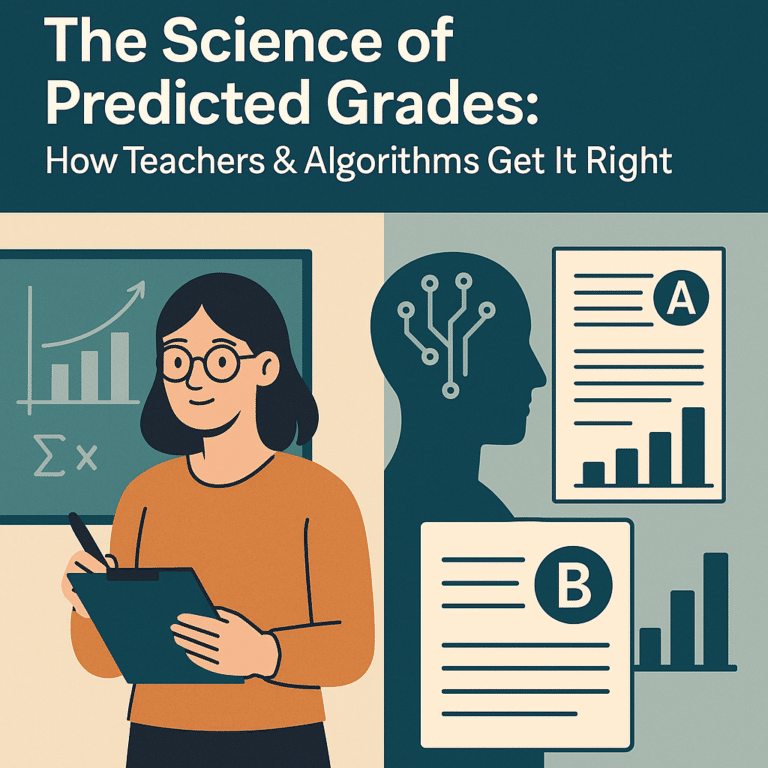
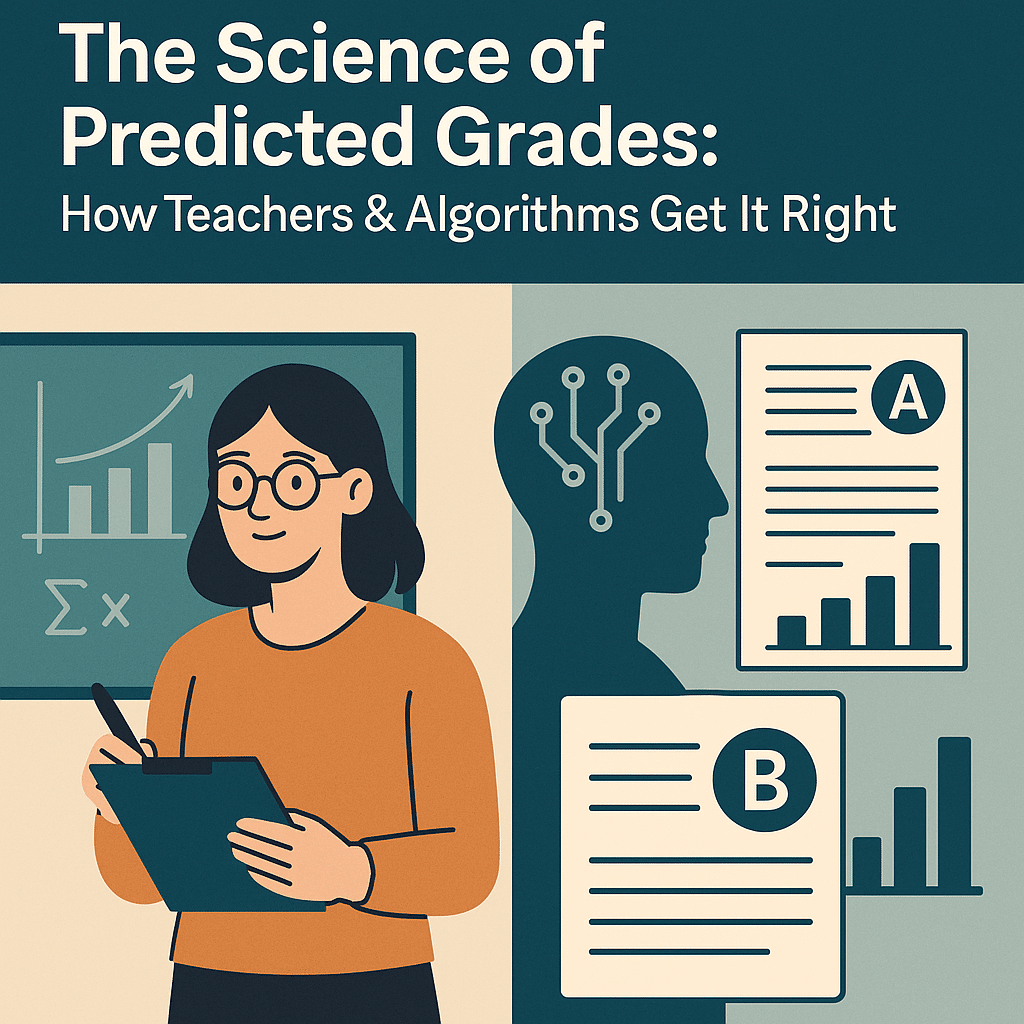
The Science of Predicted Grades:How Teachers & Algorithms Get It Right
🔍 What Are Predicted Grades?
Predicted grades are the grades teachers believe you’re most likely to achieve in your final GCSE or A-Level exams.
They’re usually used for:
University or college applications (like UCAS)
Deciding which sets or classes students go into
Teacher-assessed grading (in extreme cases, like 2020 or 2021)
These aren’t just based on vibes. They’re based on data, trends, and exam performance.
🧑🏫 How Teachers Predict Grades
Your teacher doesn’t just guess your grade from thin air.
They look at:
Your mock exam results
Classwork and homework
Effort and attitude in lessons
How you’ve performed compared to past students with similar profiles
They also consider grade boundaries from previous years and where you are on that scale.
🔗 Learn about 2024 Grade boundaries and 2025 exam time table →
🤖 Algorithms in Predicted Grades
During the 2020 pandemic, predicted grades were used instead of real exams. The UK government tried using an algorithm to “standardise” results—but it didn’t go well.
That algorithm used:
School performance history
Class rankings
Past outcomes
The result? Many students were downgraded unfairly, and public backlash forced the system to change.
So, while algorithms can help, human teachers remain the most trusted source for predicted grades.
📊 How Accurate Are Predicted Grades?
On average, predicted grades are:
About 50-60% accurate
Slightly overestimated in many cases (especially in A-Levels)
This doesn’t mean they’re useless. It just means they should be taken as a realistic goal, not a guaranteed result.
✏️ How You Can Influence Your Predicted Grades
You actually can help shape your own predicted grades.
Here’s how:
Do well in mocks – they carry a lot of weight.
Ask for feedback and improve based on it.
Show consistent effort, even if you struggle with certain topics.
Revise smart – targeted revision shows teachers you’re serious.
🧩 Final Thoughts
Predicted grades aren’t random—they’re based on real data, thoughtful teacher insights, and in some cases, technology.
Even if you think your predicted grade is lower than you’d like, it’s not set in stone. You can still prove yourself in the real exams and go beyond expectations.
Stay consistent, revise smart, and remember: you have the power to change the story.