Practise interpreting an AQA GCSE Chemistry Higher Paper 1 mark scheme with a worked calculation, a bonding explanation and a practical example.
Check your paper before marking
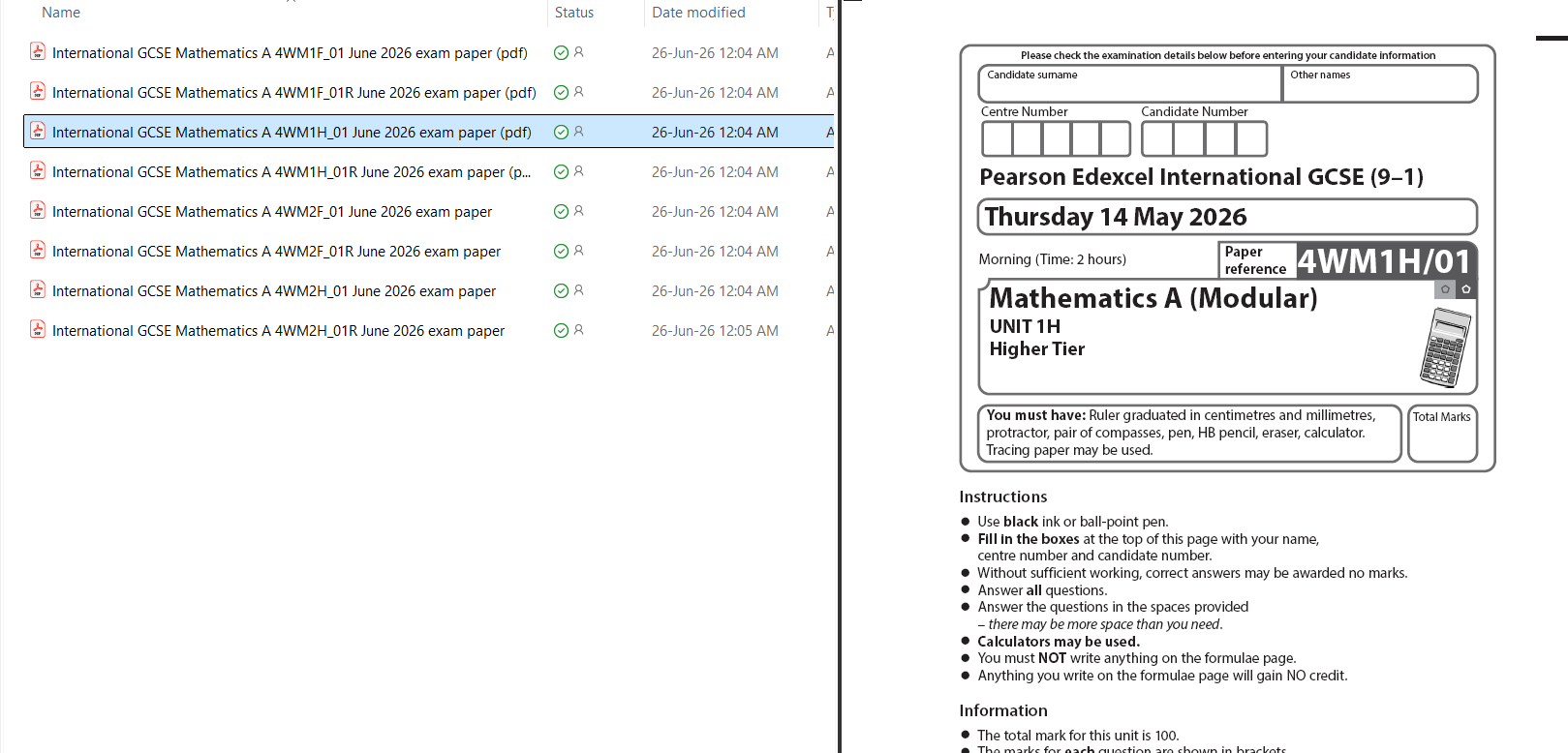
For separate Chemistry, look for 8462/1H on the cover. Use the mark scheme from the same exam series and tier. If your cover says Combined Science: Trilogy, select the corresponding Trilogy scheme. The examples below are original practice questions for revision with 2026 papers.
Calculate an amount in moles
A sample contains 5.85 g of sodium chloride. Taking its relative formula mass as 58.5, how many moles does it contain? Write the relationship first: amount = mass ÷ molar mass. Substituting gives 5.85 ÷ 58.5 = 0.100 mol. A result of 10 mol suggests you inverted the fraction. A quick estimate helps: the sample weighs one tenth of the mass of a mole.
Explain a property using particles
Why does molten sodium chloride conduct electricity? “It has charged particles” identifies part of the explanation. Solid sodium chloride has ions too. Add the feature that changes on melting: the ions can move through the liquid and carry charge. When marking, underline the words identifying the carrier and circle the words explaining its movement.
Evaluate a practical answer
A student preparing a soluble salt adds excess insoluble metal oxide to warm acid. Why filter before crystallising? The excess oxide helps use up the acid. Filtration removes the unreacted solid while the dissolved salt passes through. If the question asks only about filtration, lead with that separation.
Use the scheme on your own work
Cover the solution and attempt each question. Compare one reasoning step at a time and write a correction beside the first missing step. Return the next day with a different mass or compound. Use the published allocation for your particular question when awarding marks.